
our services
TMJ PainThere are two temporomandibular joints (TMJ), one on each side of the face. They connect the jawbone to the skull and act like sliding hinges for chewing, talking, biting, singing and making facial expressions. Problems with the joint or its surrounding muscles, called the muscles of mastication, cause temporomandibular dysfunction, often just called TMJ.
Common Causes and Symptoms of TMJ
- Injury: falls, car accidents and any direct trauma to the jaw.
- Disc dislocation: the cushioning disc inside the joint stops gliding properly.
- Tight muscles: muscles that pull the jaw to one side when opening and closing.
- Stress: muscle tension that leads to grinding and clenching.
- Weak posture: jaw muscles also attach to the neck and shoulders, so postural stress alters TMJ motion.
Symptoms can include jaw, face, neck or ear pain, headaches, difficulty chewing, being unable to open the mouth fully, and clicking, popping, locking or stiffness. Most TMJ is benign and responds well to chiropractic care.
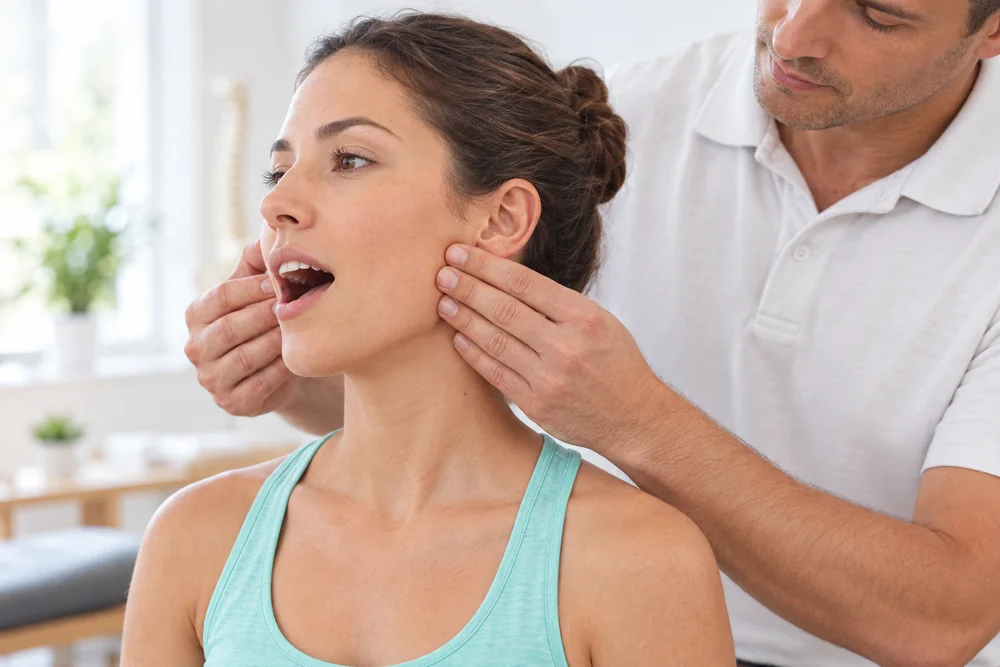

Evaluation and Treatment
Rather than just medication or a surgical referral, chiropractic care for TMJ starts with a thorough examination of the muscles, ligaments, joints, posture and gait, along with past injuries and lifestyle habits. Most TMJ conditions respond well to conservative treatment and do not require surgery.
- Chiropractic adjustments: gentle, controlled adjustments to restore optimal joint movement.
- Myofascial Release (MFR): relaxes overworked muscles in the jaw, shoulders, neck and upper back.
- Active Release Technique (ART): releases scar tissue and restores proper muscle function.
Office Hours (Both Locations)
Book Your Consultation
We are here to support your health journey. Schedule your visit today.
Frequently Asked Questions
What causes TMJ dysfunction?
Common causes include injury (falls, car accidents), disc dislocation within the joint, tight muscles, stress and poor posture affecting the muscles connected to the jaw.
What are the most common symptoms of TMJ?
Symptoms can include jaw pain, face or neck pain, ear pain, headaches, difficulty chewing, inability to fully open the mouth, clicking, jaw locking or popping, and stiffness.
Can chiropractic care help with TMJ?
Yes. Most TMJ conditions are benign and respond well to conservative, non-surgical chiropractic treatment, including adjustments, Myofascial Release and Active Release Technique.
Does TMJ always require surgery?
No. Most TMJ conditions respond well to conservative treatment and do not require surgery.
How does posture relate to TMJ pain?
The muscles around the jaw connect to the front and back of the neck, so poor posture, like rounded shoulders and a forward head position, puts stress on those muscles and frequently contributes to TMJ pain.